Why timber fails here faster than the brochure says
Any specification written for a temperate climate underestimates Tanzania. Subterranean termites are active across most of the country and will find untreated softwood in a single season. The long rains soak decks and cladding for weeks at a time, and the wetting-drying cycle cups and splits boards even when the timber survives the insects. At altitude in Arusha and on the coast in Dar es Salaam and Zanzibar, UV degrades surface coatings quickly, so the protective layer you paid for is often gone before the second year.
The result is familiar to every site manager: a deck that looked excellent at handover, was patched at year two, and was half-replaced at year five. The material cost was never the problem; the replacement and downtime were.
The five realistic options compared
Each of these has a legitimate place. The question is which failure mode you are trying to design out.
| Option | Termites | Water | Upkeep | Best used for |
|---|---|---|---|---|
| Treated softwood | Delayed, not stopped | Absorbs | High | Temporary works, concealed framing |
| Dense hardwood | Resistant | Absorbs | Seasonal oiling | Premium joinery, feature timber |
| Imported composite | Wood flour still attracts | Low, but cut ends wick | Low | Domestic decks with import budget |
| Steel | Immune | Corrodes if unprotected | Coating checks | Sub-frames and primary structure |
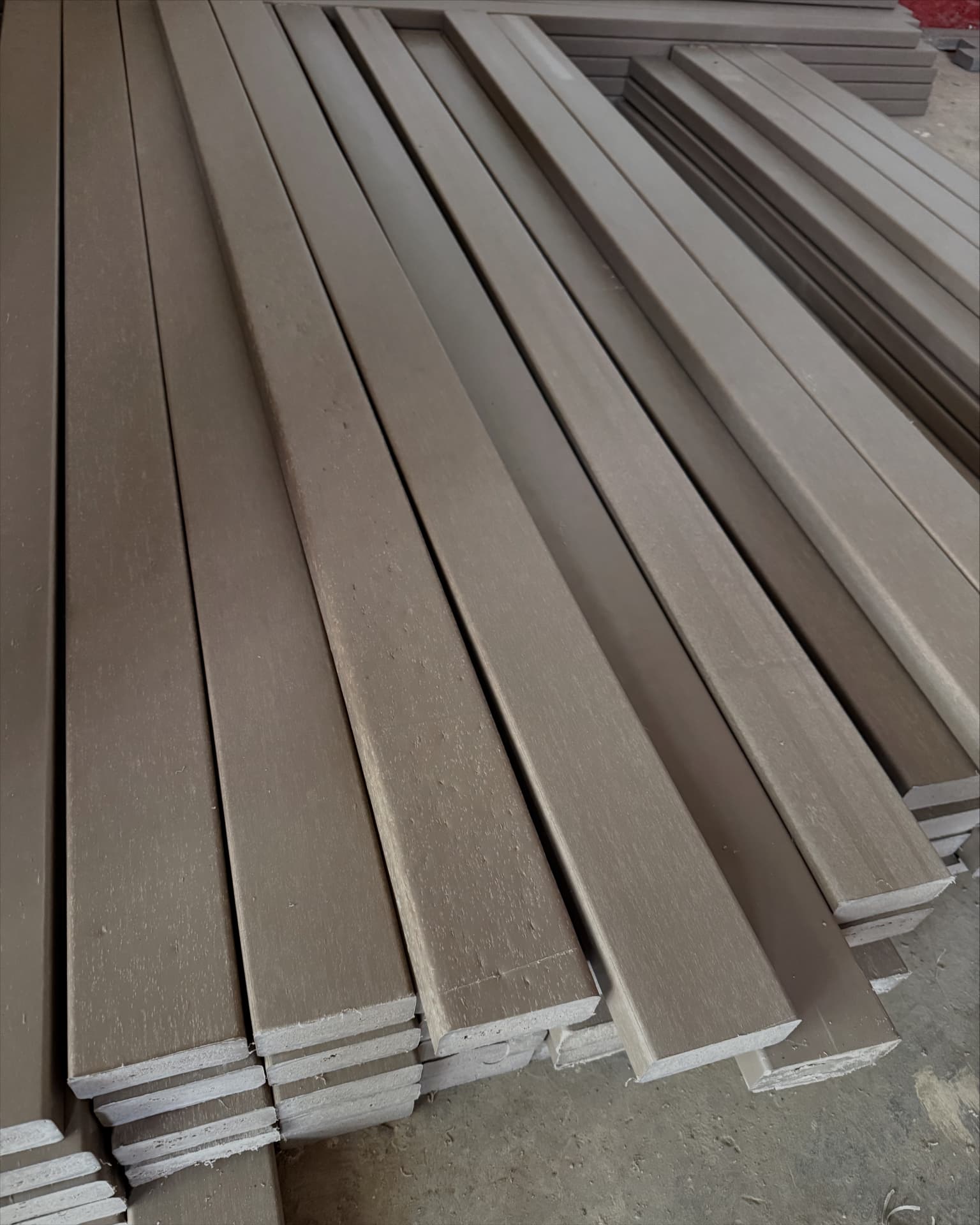
| Recycled plastic lumber | Immune | Zero absorption | Wash only | Decking, cladding, walkways, furniture |
Choosing by element, not by ideology
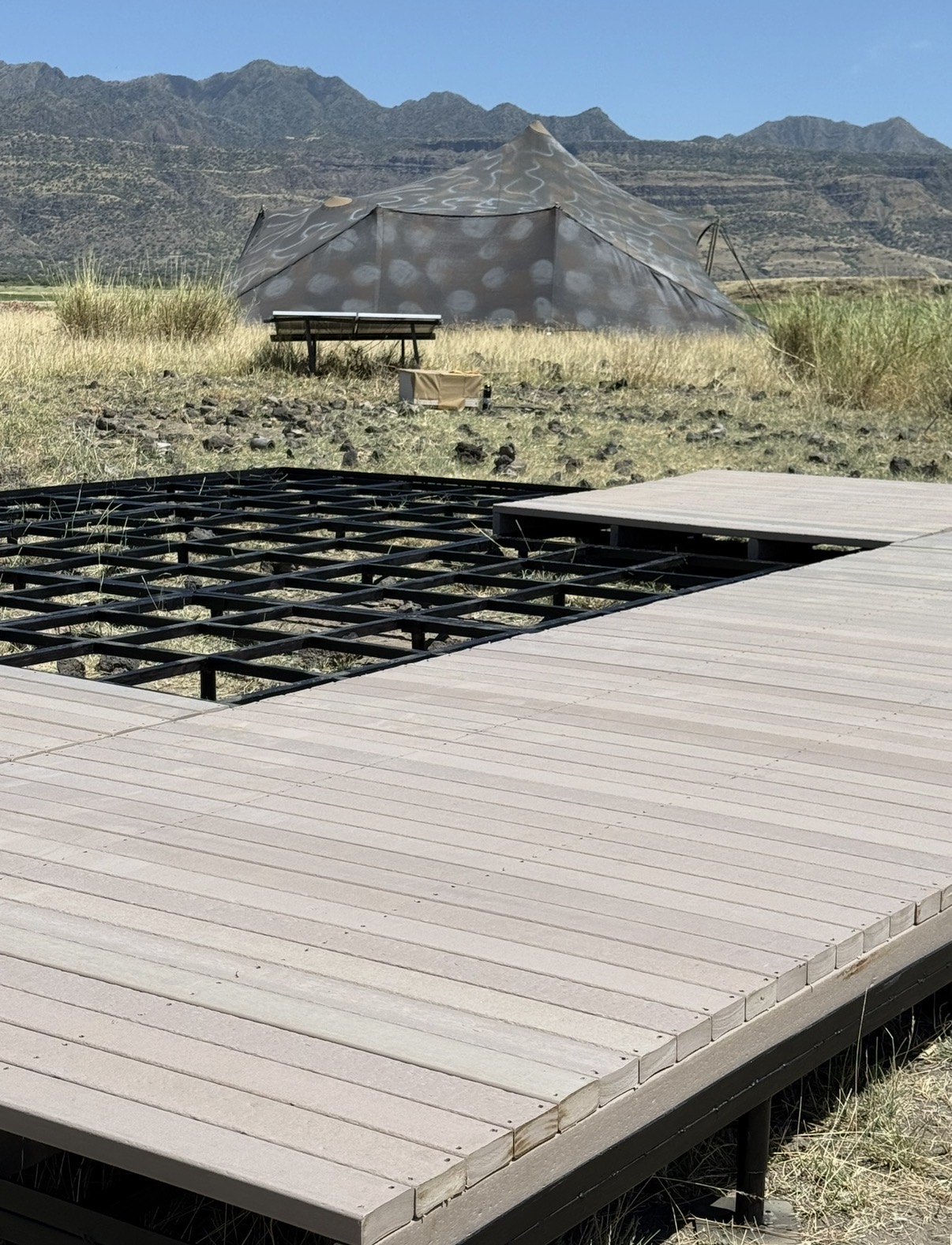
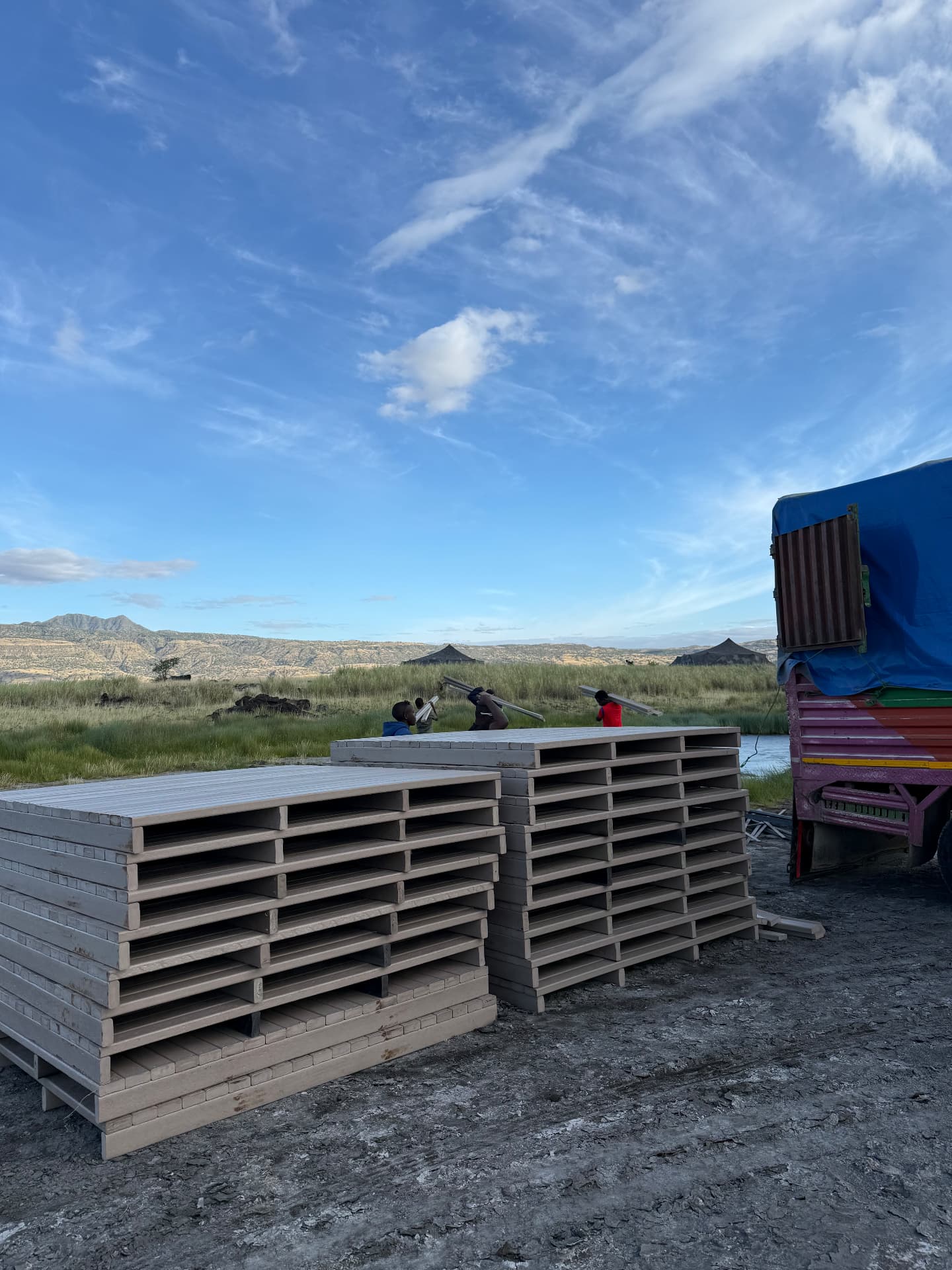
The best builds mix materials deliberately. On the camps and lodges we supply, the pattern that works is a steel sub-frame carrying recycled plastic decking, plastic cladding in every wet room, plastic fascias and balustrade infill, and timber kept for feature joinery under cover where it can be maintained.
For schools and public buildings, durability and safety come first: plastic benches, walkway boards and fencing survive heavy use, do not splinter, and cannot be stolen for firewood. For homes, the usual decision point is the pool surround and the bathroom — the two places where timber costs the owner money every single year.
- Ground-contact and splash zones — recycled plastic or steel, never softwood
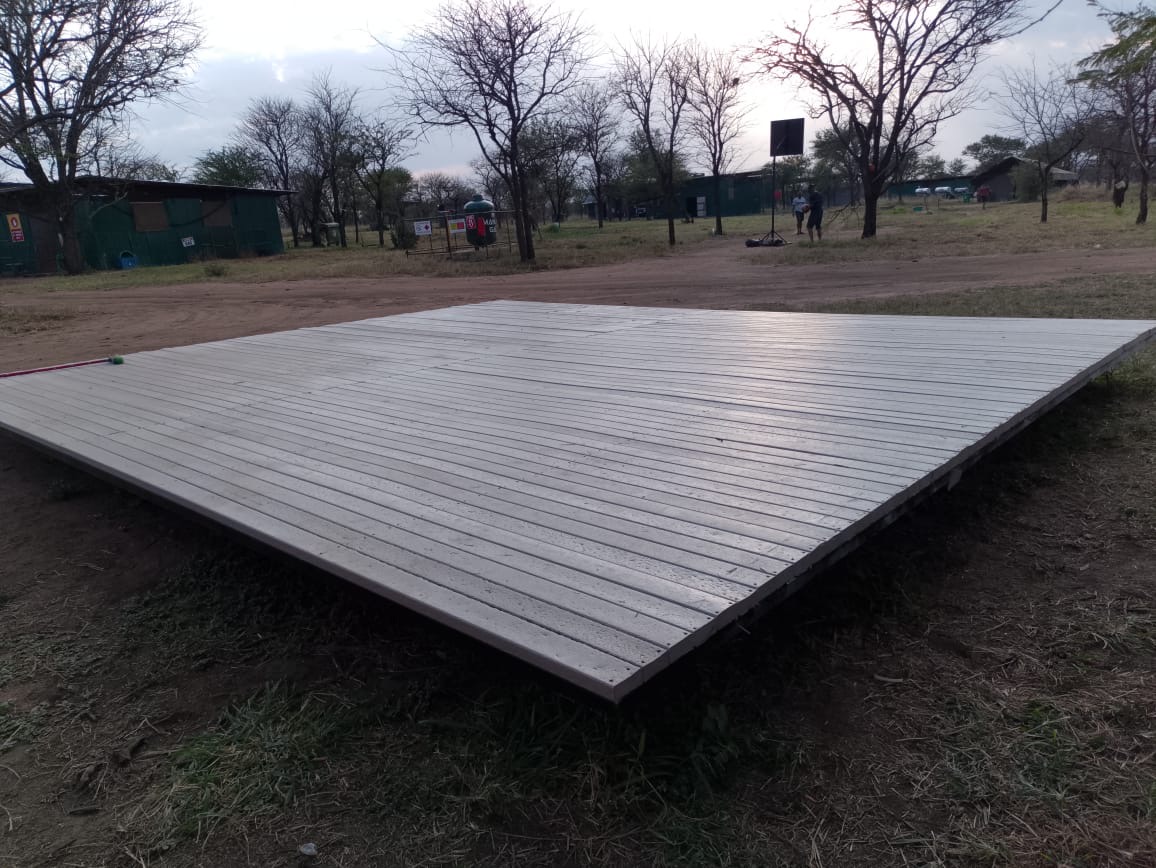
- Deck surface — recycled plastic decking on a steel or plastic sub-frame
- Wet rooms and showers — recycled plastic cladding
- Primary spans and heavy loads — steel, with plastic fixed to it
- Sheltered interior joinery — timber is still fine
The ten-year cost, not the delivery-day cost
Compare materials over the life of the building. A timber deck carries the board cost, then sanding and oiling labour every season, then partial replacement, then eventually a full rebuild with the disruption that implies for a working lodge or school. A recycled plastic deck carries a higher supply figure once, and after that a hose.
Standard decking supply is quoted at TSh 160,000 per square metre; every other profile is priced per running metre, per square metre or per piece and confirmed in a written quotation.
For a quick sense of the numbers on your own project, put your area into the calculator and send the estimate through — the quotation that comes back includes fixings, fabrication and delivery so you can compare like with like.