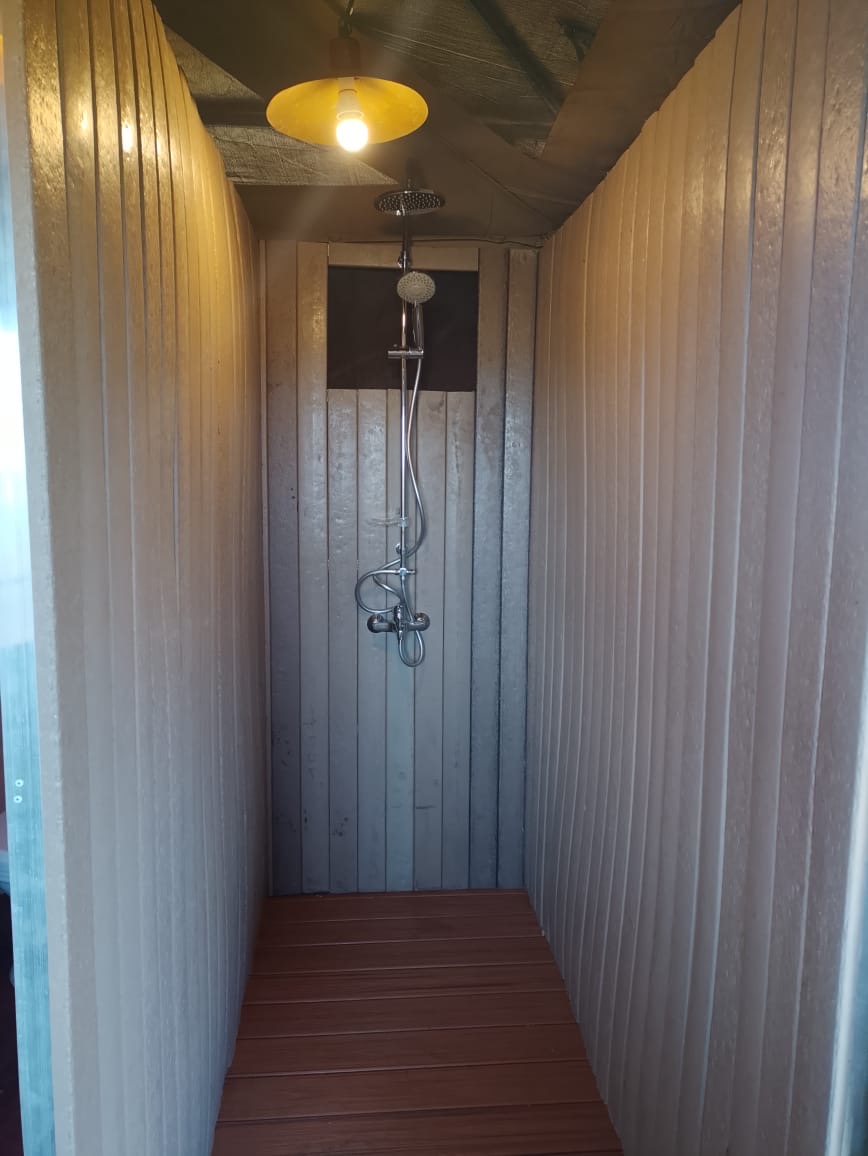
Why the wettest room is the one that fails first
In a tented camp or a lodge, the shower is the hardest working surface on the property. It is wet several times a day, often has limited ventilation, and sits in a humid environment. Timber linings absorb that water, blacken along the grain within a season or two, and start smelling long before they visibly fail. Repainting or resealing buys months, not years, and every repaint takes a room out of service.
Removing the wood removes the problem entirely. There is no fibre to absorb moisture, no grain for mould to colonise and no coating to break down. The board looks the same in year five as in year one after a wipe down.
Where it is used
Camps and hotels use the same board across every wet or high-contact surface, which keeps the detailing simple and the maintenance schedule short.
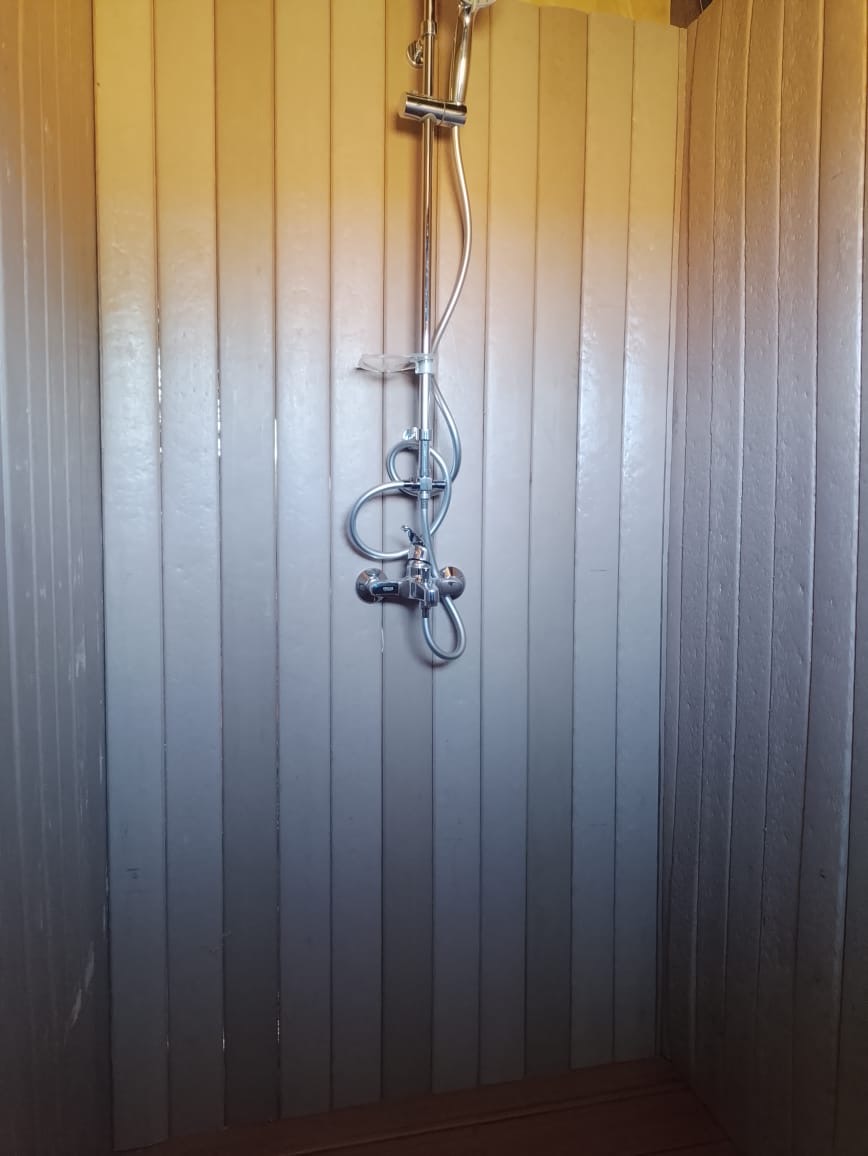
- Shower enclosures and splash walls in tented camps and lodges
- Bathroom wall linings and vanity surrounds
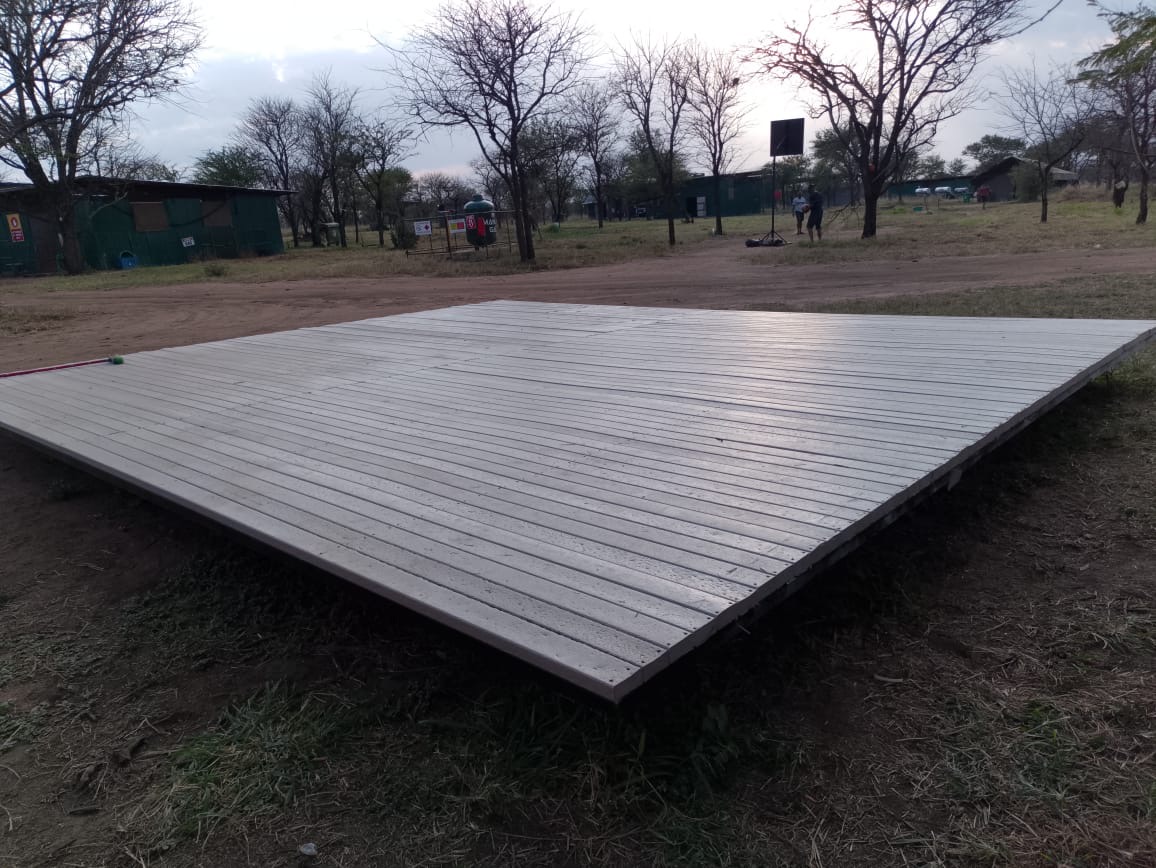
- Outdoor bath decks and bucket-shower platforms
- Pool changing rooms, staff ablutions and back-of-house wet areas
- Kitchen and laundry splashbacks where hygiene cleaning is frequent
- Boat houses, jetty structures and any surface in constant splash
How it is detailed and fixed
Boards are fixed to battens over the structure — steel, recycled plastic or, under cover, timber. Joints are detailed so water runs off the face of the board rather than into the fixing line, and an expansion allowance is left at the ends of long runs because plastic moves more than timber with temperature.
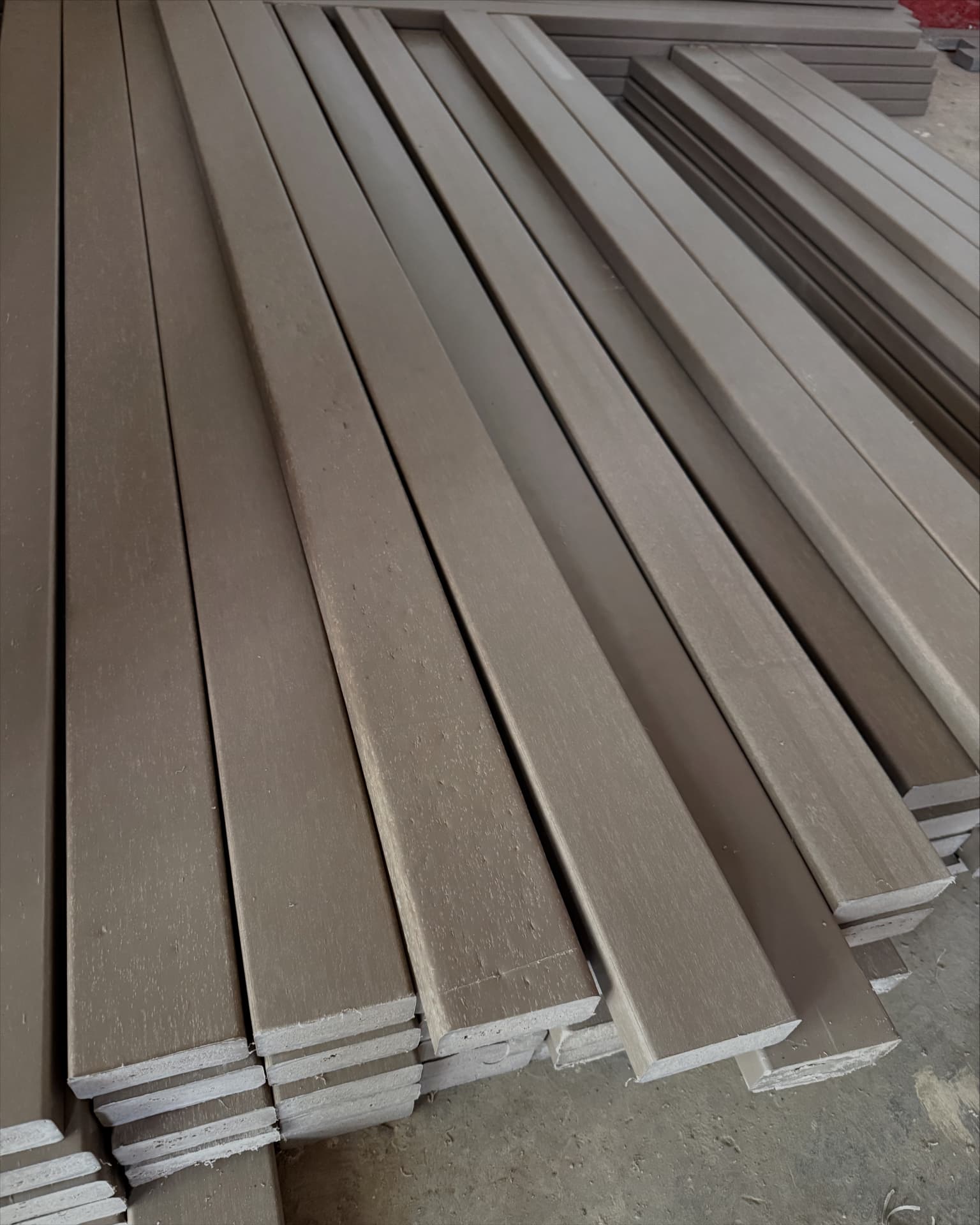
Cutting and fixing is standard site work: normal saws, pre-drilled holes and stainless or galvanised screws. Around taps, mixers and pipework the board is cut like a timber lining, and because the section is solid, the cut edge needs no sealing or edge trim to keep water out.
For refurbishments in operating camps we usually work room by room, which keeps the property trading while the bathrooms are re-lined.
Cost, ordering and finishes
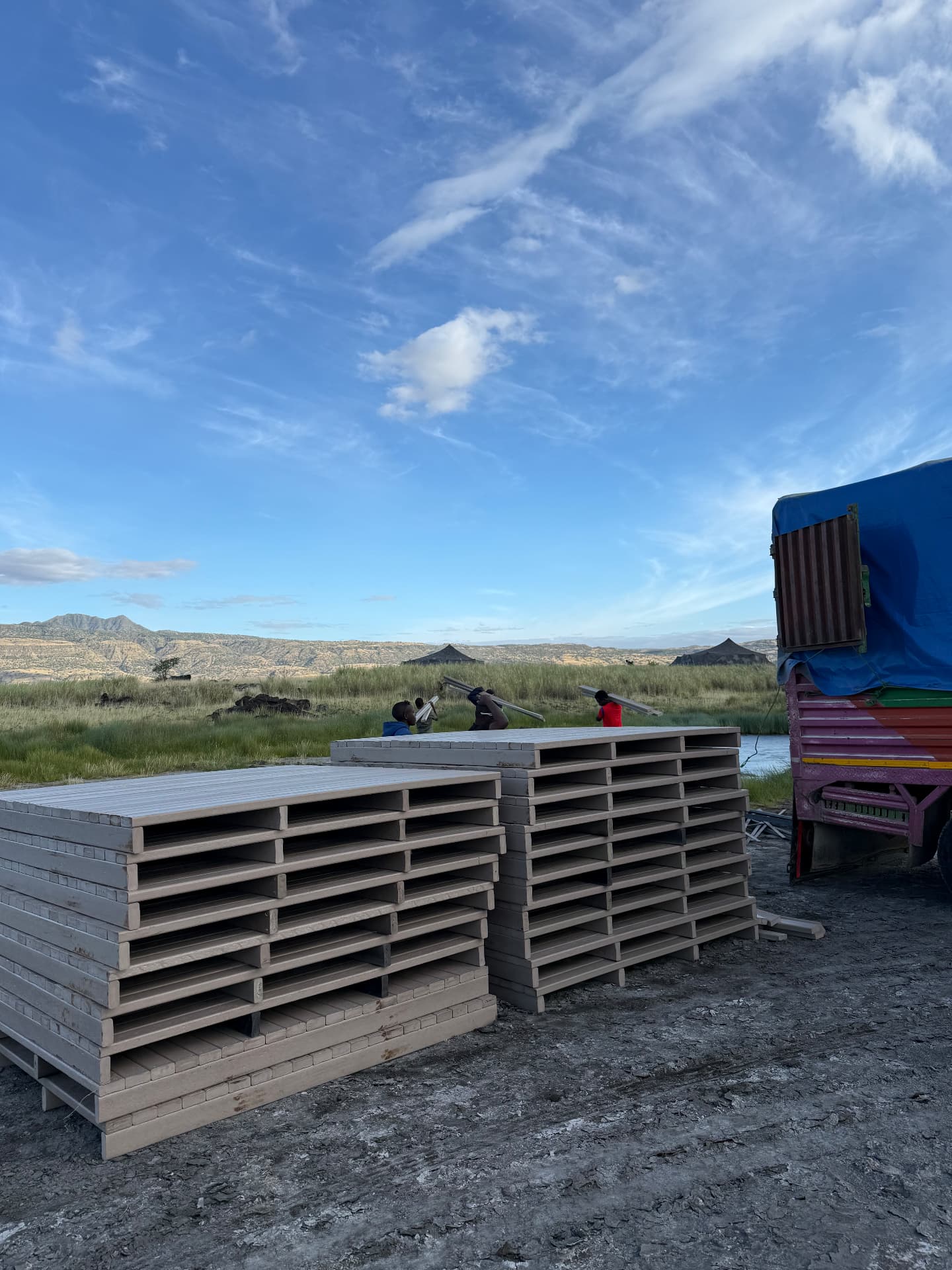
Cladding is quoted per square metre of covered surface, with battens, fixings, fabrication and delivery itemised separately in the quotation. Send the wall areas, the number of rooms and a photo of a typical bathroom and we can quote quickly.
Colour runs through the board, so the finish you choose is the finish you keep. Darker tones read well in bush and safari interiors; lighter tones make small camp bathrooms feel larger and show water marks less.