What actually happens to plastic waste in Tanzania
Most rigid plastic in Tanzania is recovered by people, not machines. Collectors gather crates, jerrycans, bottle caps, basins and packaging from households, markets, camps and dump sites, and sell it on by weight. Historically, the highest-value fraction was baled and exported, which means the country carried the environmental cost of the waste while the manufacturing value was captured somewhere else.
Recycling only becomes an industry when someone converts that material into a product people want to buy. That is the gap Green Venture fills: we buy and collect post-consumer HDPE across northern Tanzania and turn it into building materials that are then sold back into the same economy.
Which plastics can be recycled into lumber
Not every plastic is suitable. Mechanical recycling into structural profiles depends on a clean, consistent, single-polymer feedstock with a predictable melt behaviour.
| Code | Polymer | Typical items | Suitable for lumber |
|---|---|---|---|
| 2 | HDPE | Jerrycans, crates, caps, basins, detergent bottles | Yes — our primary feedstock |
| 5 | PP | Buckets, chairs, food tubs | Blended in limited proportions |
| 1 | PET | Water and soda bottles | No — different melt behaviour, recycled elsewhere |
| 3 | PVC | Pipe, cable sheathing | No — must be kept out of the stream |
| 4/6/7 | LDPE, PS, mixed | Film, foam, laminates | Generally no |
The seven steps we run in Arusha
Our factory in the Njiro Industrial Area runs the whole chain under one roof, which is unusual in the region and is the reason quality is consistent from batch to batch.
- Collect — buy-back and drop-off from collectors, camps, lodges, schools and estates
- Sort — separate HDPE from PET, PVC and contaminated material
- Prepare — wash off soil, food residue and labels, then shred to flake and dry
- Process — melt, filter and homogenise the flake
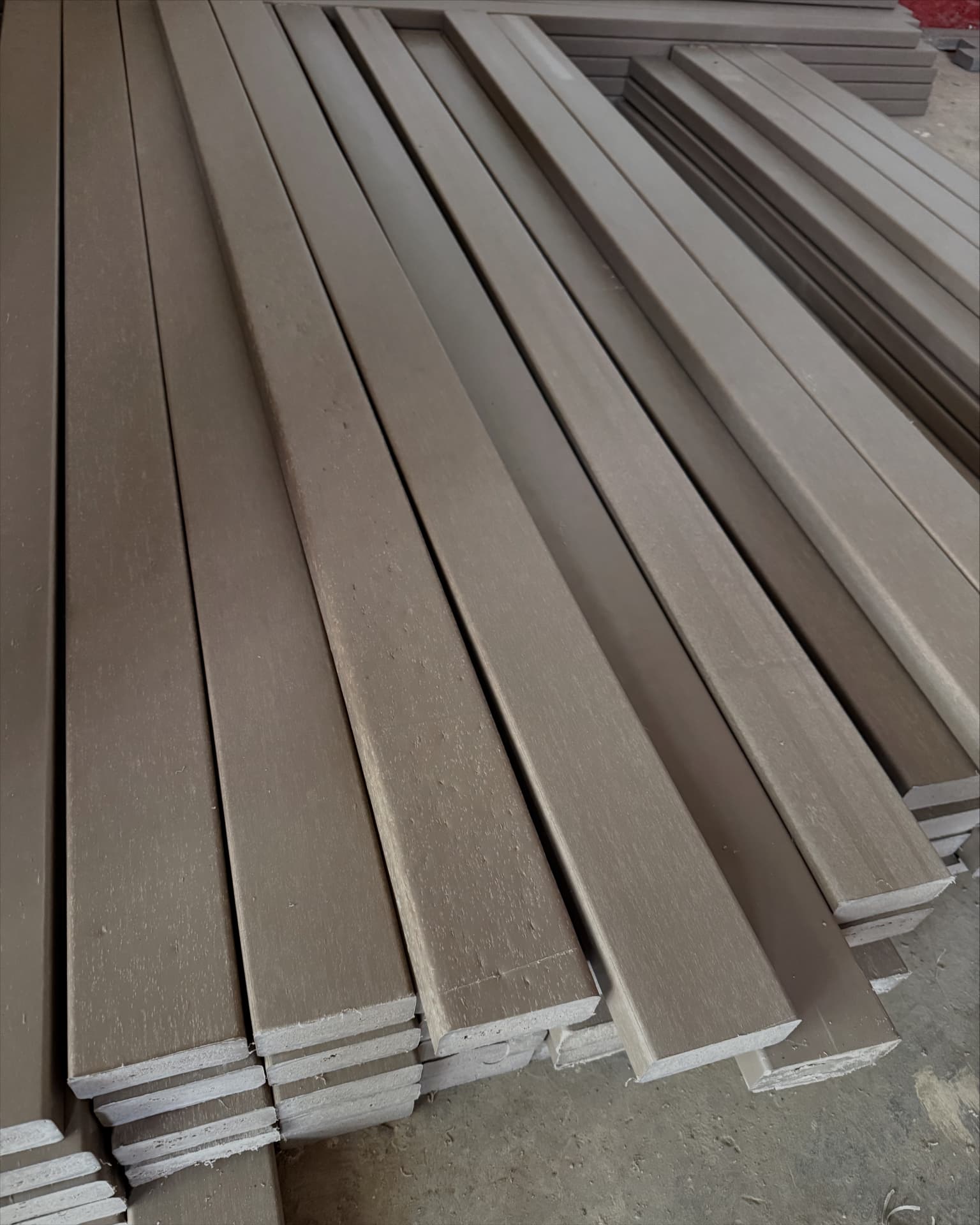
- Extrude — form planks, posts, cladding boards and furniture sections
- Finish — cool, cut, inspect and stack
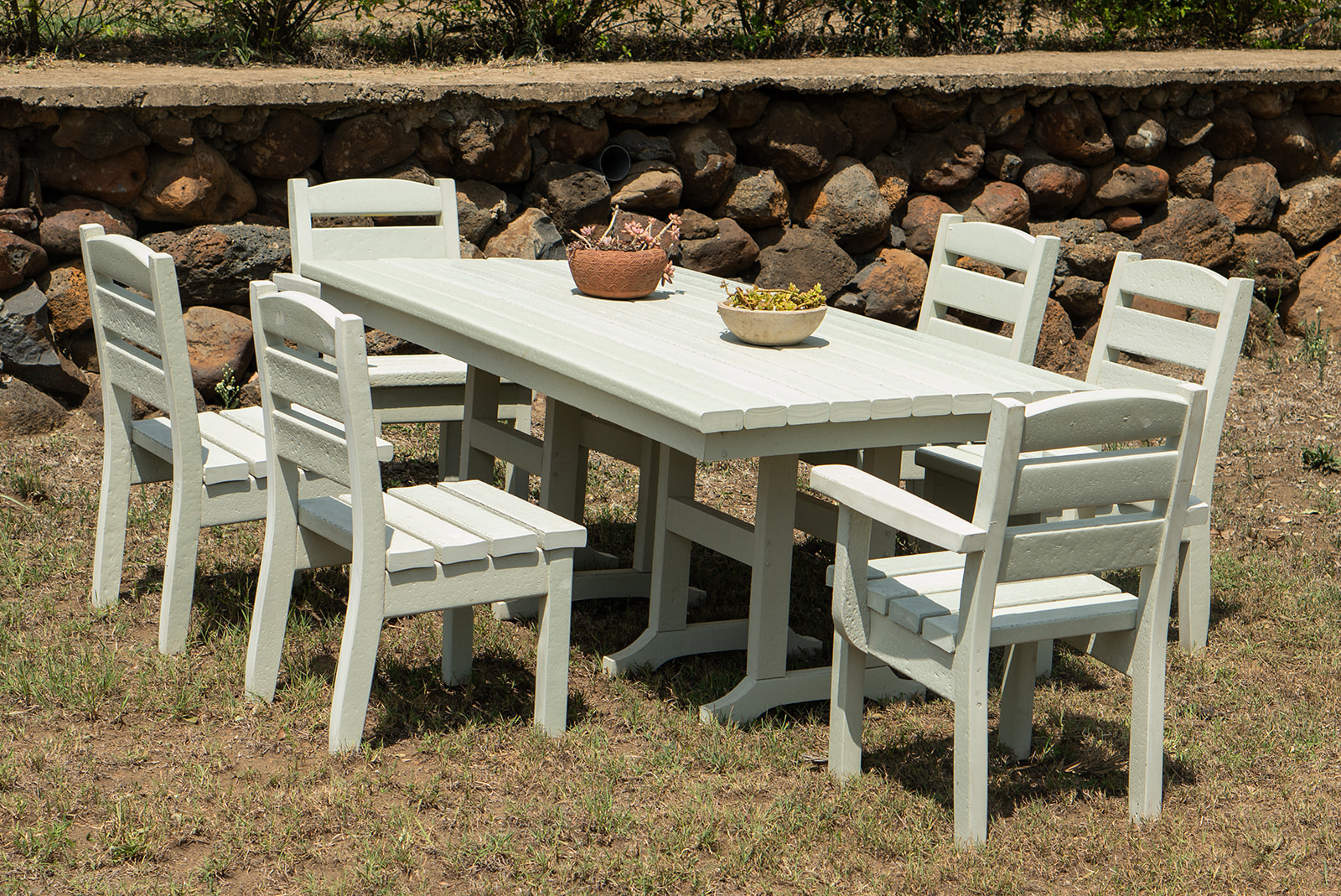
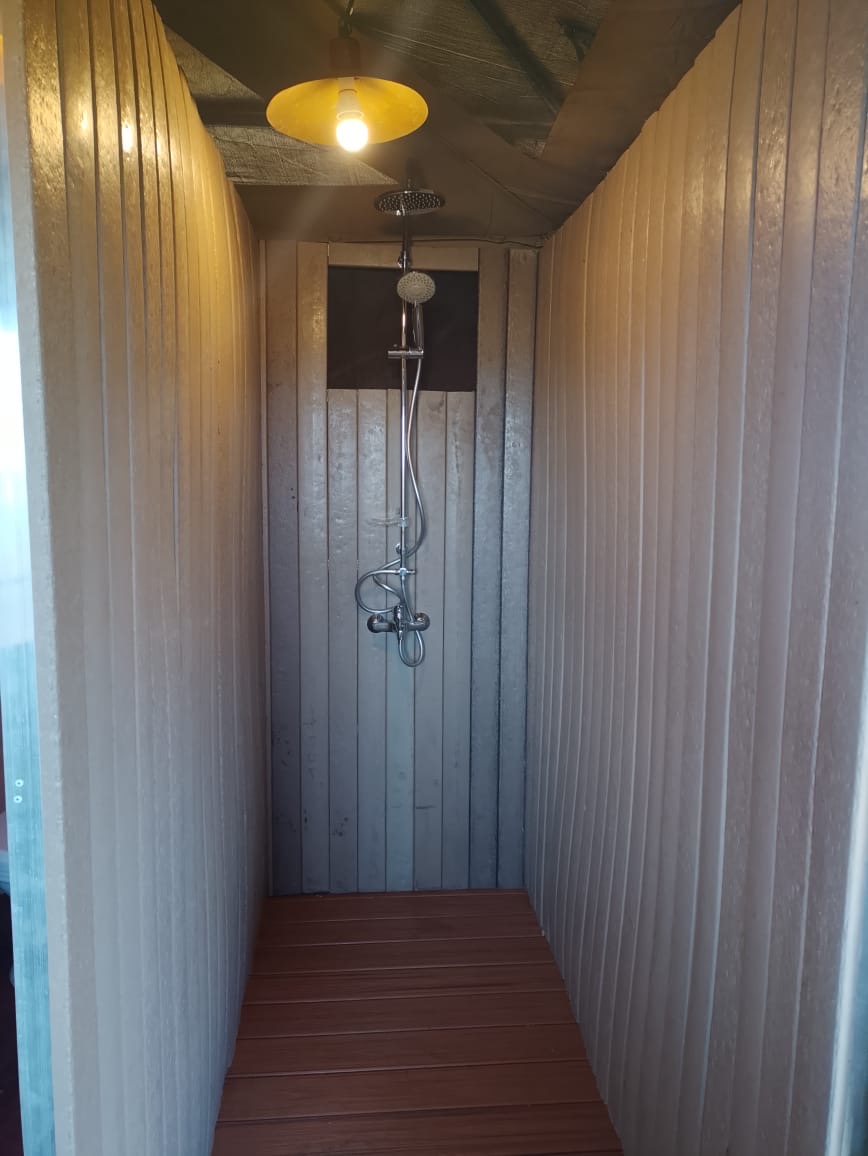
- Fabricate — build decks, platforms, pallets and furniture on site or in the workshop
The circular economy in practice
A safari camp in the northern circuit generates plastic waste it has to truck out at cost. The same camp needs decking that will survive the rains and termites. Closing that loop — camp waste in, camp decking out — is the clearest example of a circular economy anyone can point at in Tanzanian construction, and it is exactly the arrangement we run with several lodge groups.
The environmental arithmetic is straightforward. Every tonne of plastic we take in is a tonne that does not end up in a river, a roadside or an open burn pile. Every square metre of recycled plastic decking installed is hardwood that stays standing. To date that adds up to more than 2,000 tonnes of plastic recycled and an estimated 5,000 trees left uncut.
For businesses with sustainability reporting obligations, we can document the tonnage associated with a supply agreement so the diverted waste appears in your own figures.
How to supply plastic waste or partner with us
We accept clean, sorted HDPE from collectors, waste-management companies, hotels, camps, schools, bottlers and manufacturers. Volumes can be delivered to the Njiro factory or, for regular commercial quantities, collected on an agreed schedule.
Schools and community groups running collection drives are welcome to arrange a factory visit — seeing waste turned into a plank in one visit tends to do more for waste segregation than any poster. Get in touch with the tonnage, the plastic types and your location and we will arrange the logistics.